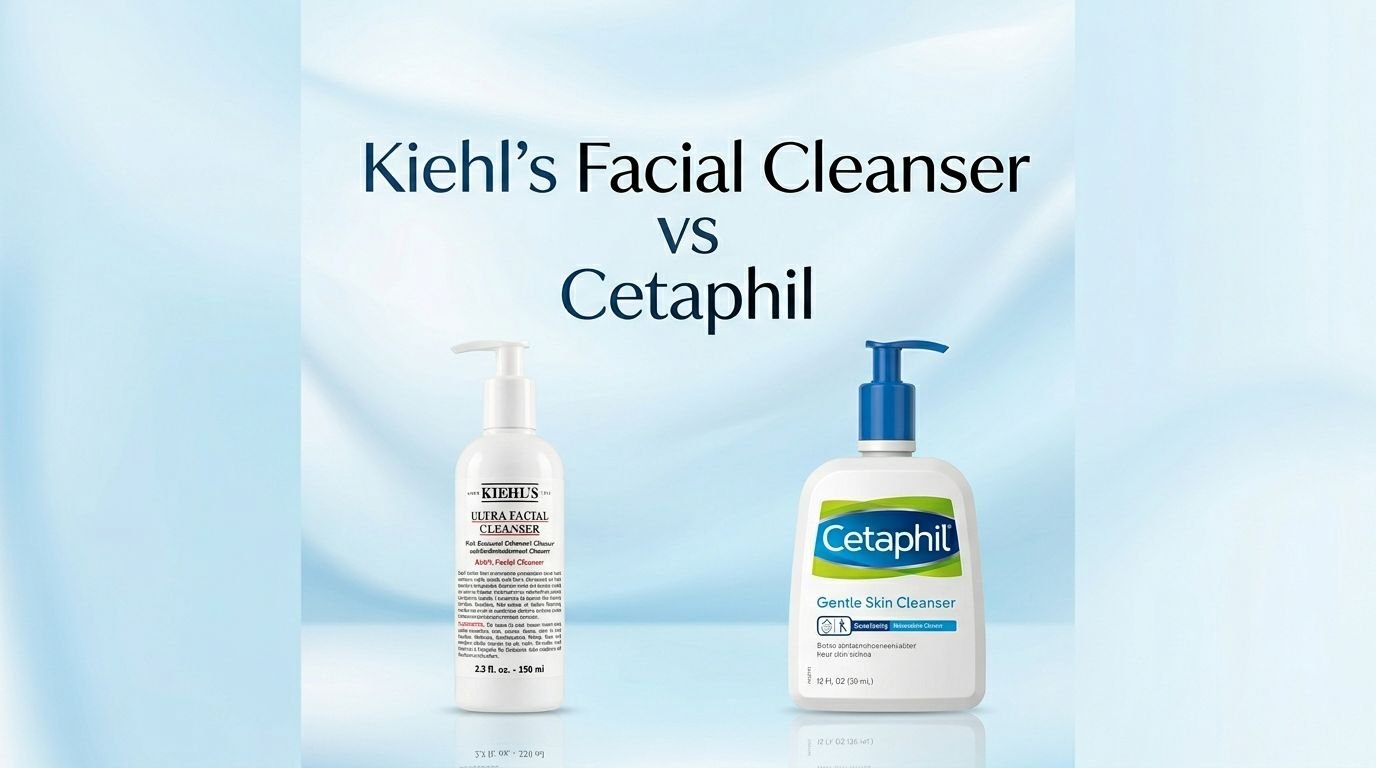
Kiehl’s Facial Cleanser vs Cetaphil: Who Takes the Crown?
You stand in the skincare aisle, two bottles in each hand. One is the Kiehl’s Ultra Facial Cleanser, a prestige brand with a loyal following.
The other is the Cetaphil Daily Facial Cleanser, a drugstore legend backed by decades of dermatologist trust. Both promise clean, soft, happy skin. Both have millions of fans. So which one actually belongs on your bathroom shelf?
This is a question that countless skincare lovers ask every single day. The price gap between these two cleansers is significant. The ingredient lists look different.
Key Takeaways:
- Kiehl’s Ultra Facial Cleanser is a premium cleanser priced around $26 for 5 oz. It features squalane, avocado oil, and glycerin. This formula works well for people with normal, dry, and sensitive skin who want a gentle yet effective foaming wash.
- Cetaphil Daily Facial Cleanser is a budget option at roughly $10 to $15 for 16 oz. It contains niacinamide, panthenol (vitamin B5), and glycerin. This cleanser suits combination to oily skin types and is a solid pick for anyone who needs a simple, no-frills routine.
- Kiehl’s offers a more hydrating experience after each wash. Many users report their skin feels soft and plump, not tight or stripped. However, the smaller bottle size and higher price tag make it a luxury choice.
- Cetaphil delivers excellent value for money and has a long history of dermatologist recommendations. It provides a gentle foaming cleanse without irritating sensitive skin, and the large bottle size lasts for months.
- Both cleansers are fragrance-free, soap-free, and dermatologist tested. Neither product contains parabens. They are both safe for daily use, morning and night.
- If budget is your priority, Cetaphil wins. If hydration and premium ingredients matter more to you, Kiehl’s is the better choice.
Kiehl’s Ultra Facial Cleanser: A Closer Look

- GENTLE HYDRATING FACE WASH: This pH-balanced cleanser helps maintain skin’s natural balance and protection barrier. Formulated with Squalane, Avocado Oil, and Glycerin, our dermatologist-tested, gentle face wash is suitable for all skin types.
- FOR ALL SKIN TYPES: Formulated for all skin types, including sensitive and dry skin. This cleanser is dermatologist-tested for safety and gentleness - it gently, yet effectively cleanses without over-drying or stripping skin of its essential oils.
Last update on 2026-06-11 / Affiliate links / Images from Amazon Product Advertising API Some of the links on this website are affiliate links, which means that at no additional cost to you, I earn a commission if you click through and make a purchase. I only recommend products and services that I believe will add value to my readers. Thank you for your support!
The Kiehl’s Ultra Facial Cleanser has earned a strong reputation as a gentle, effective daily face wash. Kiehl’s has been around since 1851, and this cleanser is one of their bestselling products. It creates a light foam that lifts away dirt, oil, and impurities without leaving skin dry or flaky.
The formula contains squalane, a plant-derived ingredient that mimics the skin’s natural oils. It also includes avocado oil and apricot kernel oil, both known for their moisturizing properties. Glycerin rounds out the ingredient list as a powerful humectant that pulls moisture into the skin.
This cleanser is pH-balanced, which means it respects the skin’s natural acid mantle. Disrupting your skin’s pH can lead to redness, sensitivity, and breakouts. Kiehl’s has formulated this product to avoid that problem entirely.
The texture is a clear gel that turns into a soft, lightweight foam on contact with water. You only need a small amount per use. A 5 oz bottle can last 6 to 8 weeks with daily use, depending on how much you apply each time.
Pros:
- Gentle formula with squalane and avocado oil for added hydration
- pH-balanced to protect the skin barrier
- Fragrance-free, paraben-free, and suitable for all skin types
- Leaves skin feeling soft and clean without tightness
Cons:
- Higher price point at around $26 for 5 oz
- Smaller bottle compared to drugstore options
- Some users with very oily skin may find it not cleansing enough
Cetaphil Daily Facial Cleanser: A Closer Look

- CETAPHIL DAILY FACIAL CLEANSER: Reinforces the skin barrier, balances skin and minimizes the appearance of pores
- IDEAL FOR SENSITIVE, COMBINATION TO OILY SKIN: Clinically proven to deep clean by removing dirt, excess oils, impurities and pollution microparticles

Last update on 2026-06-11 / Affiliate links / Images from Amazon Product Advertising API Some of the links on this website are affiliate links, which means that at no additional cost to you, I earn a commission if you click through and make a purchase. I only recommend products and services that I believe will add value to my readers. Thank you for your support!
Cetaphil is a brand that dermatologists have recommended for over 70 years. The Cetaphil Daily Facial Cleanser is their most popular face wash for combination and oily skin types. It provides a gentle foaming cleanse that removes dirt, excess oil, and makeup residue.
The formula features niacinamide (vitamin B3), an ingredient that helps brighten skin and minimize the appearance of pores. Panthenol (vitamin B5) adds moisture and helps soothe the skin barrier. Glycerin works as a humectant to keep skin hydrated after cleansing.
Cetaphil uses mild surfactants like cocamidopropyl betaine and disodium laureth sulfosuccinate. These ingredients cleanse effectively without causing the harsh stripping effect that some face washes create. The result is a clean but comfortable feeling after every wash.
The cleanser comes in a large 16 oz bottle, which lasts several months for most users. This makes it one of the most cost-effective facial cleansers on the market. The formula is also hypoallergenic and non-comedogenic, meaning it will not clog pores or irritate sensitive skin.
Pros:
- Very affordable at around $10 to $15 for a large 16 oz bottle
- Contains niacinamide for brightening and pore-minimizing benefits
- Gentle foaming action that does not strip natural oils
- Dermatologist recommended and hypoallergenic
Cons:
- May not provide enough hydration for very dry skin types
- The formula does not include premium moisturizing oils
- Some users have reported a slightly slimy residue after rinsing
Ingredient Comparison: What Goes on Your Skin Matters
The ingredient lists of these two cleansers reveal their different priorities. Kiehl’s focuses on hydration and skin nourishment. It uses squalane, avocado oil, and apricot kernel oil to deliver moisture while cleansing. These ingredients make the cleanser feel rich and luxurious on the skin.
Cetaphil takes a more functional approach. Its star ingredients are niacinamide and panthenol, both of which support skin health without adding heaviness. Niacinamide is a proven ingredient for reducing redness, evening skin tone, and controlling oil production. Panthenol strengthens the skin barrier and reduces water loss.
Both cleansers use glycerin as a base humectant. This is one of the most well-studied and effective moisturizing ingredients in skincare. It attracts water to the skin and helps maintain hydration levels throughout the day.
One key difference is the surfactant system. Kiehl’s uses decyl glucoside and cocamidopropyl betaine, while Cetaphil relies on cocamidopropyl betaine and disodium laureth sulfosuccinate. Both systems are gentle, but Kiehl’s formula tends to produce a softer, less stripping lather compared to Cetaphil.
If you care about having premium plant oils in your cleanser, Kiehl’s is the clear winner. If you want active ingredients like niacinamide that target specific skin concerns, Cetaphil has the edge.
Skin Type Suitability: Which Cleanser Fits Your Face?
Your skin type should be the biggest factor in your decision. These two cleansers serve different skin needs, and choosing the wrong one can lead to frustration.
Kiehl’s Ultra Facial Cleanser works best for people with normal, dry, or sensitive skin. The moisturizing oils and squalane help prevent that tight, dry feeling after washing. If your skin tends to feel parched or irritated after cleansing, Kiehl’s is likely the better option for you.
Cetaphil Daily Facial Cleanser is formulated for combination to oily skin. It removes excess oil effectively without over-drying. If your T-zone gets shiny by midday or you struggle with enlarged pores, Cetaphil will address those concerns directly.
People with acne-prone skin can use either cleanser safely. Both are non-comedogenic and soap-free. However, Cetaphil’s niacinamide content gives it a slight advantage for acne management because niacinamide helps regulate sebum production and reduce inflammation.
For those with very sensitive or reactive skin, both products are good choices. Kiehl’s offers a more soothing wash experience because of its oil content. Cetaphil is the safer bet if you want a formula with a long track record of dermatological testing.
Texture and User Experience
The way a cleanser feels on your skin matters more than most people realize. A good texture makes you want to wash your face. A bad one makes the whole routine feel like a chore.
Kiehl’s Ultra Facial Cleanser has a clear, gel-like consistency. It transforms into a delicate, airy foam when mixed with water. The foam feels silky and smooth on the skin. After rinsing, most users describe their skin as feeling soft, hydrated, and refreshed. There is no tightness or dryness.
Cetaphil Daily Facial Cleanser has a slightly thicker, more viscous texture. It creates a light foam that spreads easily across the face. The lather is not as rich as Kiehl’s, but it still feels clean and pleasant. After rinsing, some users notice a slight film on the skin. This is normal and comes from the gentle surfactants.
The rinsing experience is different between the two. Kiehl’s rinses off quickly and completely. Cetaphil can take an extra few seconds of splashing to remove fully. This is a minor difference, but it matters to people who prefer a squeaky-clean feel.
Both cleansers work well with washcloths, cleansing tools, and bare hands. Neither product requires any special application method. Just wet your face, apply a small amount, massage gently, and rinse.
Price and Value: Where Your Money Goes
Price is often the deciding factor in the Kiehl’s vs Cetaphil debate. The gap between these two products is significant.
Kiehl’s Ultra Facial Cleanser costs about $26 for a 5 oz bottle. That works out to roughly $5.20 per ounce. A smaller 2.5 oz travel size is available for around $16. This places Kiehl’s firmly in the premium skincare category.
Cetaphil Daily Facial Cleanser costs approximately $10 to $15 for a 16 oz bottle. That is less than $1 per ounce. You get more than three times the product for less than half the price. The value here is hard to beat.
Does the price difference reflect a quality difference? Partially. Kiehl’s uses higher-cost ingredients like squalane and avocado oil. The brand also invests heavily in research, packaging, and retail experience. You are paying for both the formula and the brand.
Cetaphil keeps costs low by using effective but affordable ingredients. The brand has perfected its formulas over decades and produces products at scale. You get a clinically proven cleanser without the luxury markup.
If you are on a tight budget, Cetaphil is the smarter financial choice. If you can afford to spend more and you value the premium ingredient profile, Kiehl’s provides a noticeably different cleansing experience.
Dermatologist Trust and Clinical Backing
Both brands carry strong credibility in the skincare world, but their paths to trust are different.
Cetaphil has been a dermatologist-recommended brand since the 1940s. It is one of the first names that skin doctors mention for patients with sensitive, irritated, or compromised skin. Major publications like Wirecutter and People have consistently featured Cetaphil in their “best cleanser” lists. The brand conducts extensive clinical testing on all its products.
Kiehl’s has a pharmacy heritage dating back to 1851. The brand started as an apothecary in New York City and has built its reputation on science-backed formulations. Kiehl’s products are dermatologist tested, and the Ultra Facial Cleanser is recommended for all skin types, including sensitive and acne-prone skin.
Both brands avoid parabens, and both have earned trust through decades of consistent performance. The Guardian listed Kiehl’s Ultra Facial Cleanser as the best cleanser for sensitive skin in their 2025 roundup. Meanwhile, Wirecutter has named Cetaphil’s Gentle Skin Cleanser as a top pick for years.
If dermatologist approval matters to you, you cannot go wrong with either brand. Both have earned their place in the skincare hall of fame.
Packaging and Convenience
Kiehl’s Ultra Facial Cleanser comes in a sleek, white squeeze tube with the brand’s classic apothecary-style label. The tube is easy to control and dispenses product without waste. It looks attractive on a bathroom counter and travels well in a toiletry bag.
Cetaphil Daily Facial Cleanser uses a simple plastic bottle with a pump or flip-top cap, depending on the size. The 16 oz bottle is large and sturdy. The pump mechanism makes it easy to dispense the right amount without mess. However, the bigger bottle is not ideal for travel.
From an environmental perspective, both brands have room for improvement. Kiehl’s offers a recycling program at their stores where you can return empty containers. Cetaphil’s packaging is recyclable through standard curbside programs in most areas.
If portability matters to you, Kiehl’s smaller sizes (2.5 oz) make it the better travel companion. For home use, Cetaphil’s larger bottle wins on convenience because you refill and replace it far less often.
How Each Cleanser Performs on Makeup Removal
Neither the Kiehl’s Ultra Facial Cleanser nor the Cetaphil Daily Facial Cleanser is marketed as a dedicated makeup remover. However, both can handle light to moderate makeup removal as part of a double-cleansing routine.
Kiehl’s does a decent job at dissolving light foundation, sunscreen, and BB cream. The plant oils in the formula help break down oil-based products on the skin. For heavy or waterproof makeup, you will still need a dedicated cleansing oil or micellar water as a first step.
Cetaphil performs similarly with light makeup. Its gentle surfactants can lift away mineral sunscreen and light coverage products. It struggles with heavier formulas like full-coverage foundation and waterproof mascara.
For the best results, use either cleanser as the second step in a double-cleanse routine. Start with an oil-based cleanser or micellar water to break down stubborn products. Then follow up with your Kiehl’s or Cetaphil cleanser to remove any remaining residue and leave skin clean.
Both cleansers work well with a soft washcloth if you need a little extra help removing stubborn product traces. Avoid rubbing too hard, as this can irritate the skin.
Long-Term Effects on Skin Health
Using a cleanser daily means its long-term impact on your skin barrier is crucial. A cleanser that feels great today but damages your barrier over time is not worth keeping.
Kiehl’s Ultra Facial Cleanser supports long-term skin health through its pH-balanced formula and moisturizing oils. Squalane is known to strengthen the skin barrier over time. Regular use helps maintain skin’s moisture levels and reduces the risk of dryness-related irritation. Users who have used this cleanser for months report consistent results without any negative long-term effects.
Cetaphil Daily Facial Cleanser also supports barrier health through panthenol and niacinamide. Panthenol is a proven barrier-repair ingredient. Niacinamide improves skin’s resilience over time and helps even out skin tone. Long-term Cetaphil users often praise the cleanser for keeping their skin stable and predictable.
Neither cleanser contains harsh ingredients that would compromise skin health with extended use. Both are free from alcohol, artificial fragrances, and strong chemical exfoliants. This makes them safe choices for a permanent spot in your daily routine.
If you have concerns about long-term skin barrier health, either product will serve you well. The key is to pair your cleanser with a good moisturizer to lock in hydration after each wash.
Who Should Choose Kiehl’s?
Kiehl’s Ultra Facial Cleanser is the right pick for a specific type of skincare user. If your skin runs dry or dehydrated, the squalane and plant oils will give you the moisture boost you need during cleansing. This cleanser treats your skin gently while still removing daily grime.
People who enjoy a premium skincare experience will appreciate the texture, packaging, and overall feel of this product. It feels like a treat every time you use it. If self-care rituals matter to you, Kiehl’s adds a touch of luxury to your morning and evening routines.
This cleanser also works well for anyone dealing with seasonal dryness. During winter months, many people find that their regular cleanser leaves skin feeling tight and uncomfortable. Kiehl’s formula helps combat that dryness effectively.
If you are willing to invest more money in your skincare routine and you value high-quality ingredients, Kiehl’s is a solid investment. The price is higher, but the experience and results justify it for many loyal users.
Who Should Choose Cetaphil?
Cetaphil Daily Facial Cleanser is ideal for a practical, results-driven skincare user. If you want a cleanser that works, does not irritate, and does not break the bank, Cetaphil delivers on all three fronts. It is the definition of reliable skincare.
People with oily or combination skin will benefit most from this formula. The gentle foaming action removes excess sebum without stripping the skin. The niacinamide content also helps control oil production over time, making your skin less greasy throughout the day.
Cetaphil is also the go-to choice for minimalists. If you want a short, simple skincare routine with products that just work, this cleanser fits perfectly. There are no fancy ingredients to research, no complicated application steps. Just wash and go.
Budget-conscious shoppers will love the value proposition. A single 16 oz bottle lasts for months. You spend less money per year on your cleanser while still getting a dermatologist-approved, clinically tested product. That is a win for your skin and your wallet.
The Final Verdict: Kiehl’s Facial Cleanser vs Cetaphil
Choosing between Kiehl’s and Cetaphil comes down to your priorities. Both are excellent cleansers. Both are safe for sensitive skin. Both have earned the trust of millions of users worldwide.
Pick Kiehl’s Ultra Facial Cleanser if you want a hydrating, luxurious wash experience with premium plant-based ingredients. It is best for dry, normal, and sensitive skin types. Be prepared to pay more, but know that you are getting a refined, well-crafted formula.
Pick Cetaphil Daily Facial Cleanser if you want proven performance at a fraction of the cost. It is best for combination to oily skin types and anyone who values simplicity and affordability. The niacinamide and panthenol content give it functional benefits that many premium cleansers lack.
There is no wrong answer here. The “best” cleanser is the one that matches your skin type, fits your budget, and makes you want to wash your face every single day.
FAQs
Is Kiehl’s Ultra Facial Cleanser worth the higher price?
For many users, yes. The formula contains premium ingredients like squalane and avocado oil that provide added hydration during cleansing. If you have dry or sensitive skin, the extra cost delivers a noticeably better experience. However, if your main goal is basic cleansing on a budget, Cetaphil offers strong results for much less money.
Can I use Cetaphil Daily Facial Cleanser if I have dry skin?
The Cetaphil Daily Facial Cleanser is formulated for combination to oily skin. If you have dry skin, the Cetaphil Gentle Skin Cleanser is a better option from the same brand. It offers a non-foaming, cream-based formula that provides more moisture during cleansing.
Are both cleansers safe for acne-prone skin?
Yes. Both the Kiehl’s Ultra Facial Cleanser and Cetaphil Daily Facial Cleanser are non-comedogenic and soap-free. They will not clog pores or trigger breakouts. Cetaphil has a slight edge for acne-prone skin because its niacinamide content helps regulate oil and reduce inflammation.
Can I use these cleansers twice a day?
Both cleansers are safe for twice-daily use. You can use them in the morning and evening without risking irritation or over-drying. Just follow up with a moisturizer to keep your skin hydrated after each wash.
Do these cleansers remove sunscreen effectively?
Both cleansers can remove light mineral and chemical sunscreens. For heavy, water-resistant sunscreens, it is best to use a dedicated cleansing oil or micellar water first and then follow up with your cleanser as a second step.
Which cleanser do dermatologists recommend more often?
Cetaphil has a longer history of dermatologist recommendations, especially for patients with sensitive or problematic skin. Kiehl’s is also dermatologist tested and approved. Both brands appear regularly in professional skincare recommendations and “best of” lists from major publications.

Kiera Violet is a passionate product reviewer and lifestyle enthusiast who founded Life Insights to help consumers make informed purchasing decisions. With a keen eye for quality and value, Kiera specializes in comprehensive Amazon product reviews across multiple niches, from beauty essentials to everyday lifestyle products.